
Please ensure Javascript is enabled for purposes of website accessibility Security Sector Reform - Setara
Find the Media Publications You Need
Human Security & Security Sector Reform

Creating Responsive and Democratic Security Institutions

Guiding the transformation of the Indonesian National Armed Forces (TNI) and the Indonesian National Police (Polri) to ensure they are integrated into a democratic, professional socio-political system that prioritises the protection of civilians.

Why It Matters

Security Reform as the Key to Democracy

01

Strengthening Civilian Supremacy

Civilian supremacy is a cornerstone of a democratic system, designed to prevent the return of military or security forces’ domination in the civilian sphere.

02

Protection and Promotion of Human Rights

Ensuring that state security practices respect human rights, and closing regulatory loopholes so that the use of force by the authorities always remains within the bounds of the law.

03

A Shift in the Security Paradigm Towards Human Security

Shifting the focus of security from merely protecting the state to protecting individuals, in order to implement policies that ensure the safety of citizens.

04

Preventing the Militarisation and/or Securitisation of Civil Society

Criticising the growing involvement of security institutions in civilian affairs in order to prevent militarisation that could threaten democratic governance.

Key Issues

Professional and Democratic Security Sector

Reform of the Indonesian National Armed Forces

Strengthening military professionalism, reaffirming the role of national defence, and limiting military involvement in civilian affairs to ensure it is consistent with the principles of civilian supremacy and democracy.
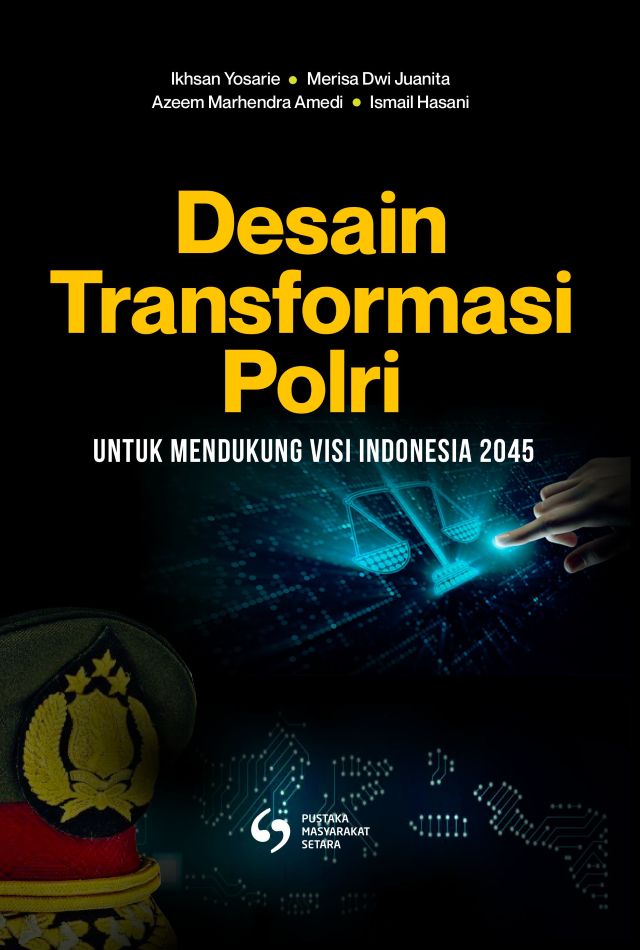
Police Reform

Promoting greater accountability and professionalism within the police force by reforming the governance of the use of force by officers and strengthening independent oversight.

Promoting Human Security

Shifting from a state-centred approach to security to one that prioritises human safety and well-being.

The Protection and Promotion of Human Rights in the Security Sector

Examining the use of force by law enforcement agencies, accountability mechanisms for human rights violations, and the integration of human rights standards into security policies and operations.

Security Governance and the Protection of Human Rights in Papua

Strategic research on the role of maritime diplomacy and border crisis management within the framework of national defence

Impact

The Real Impact of Advocacy Work

Individuals & Communities

Strengthening capacity to address security threats

The focus of this study is to strengthen communities’ capacity to identify, prevent and respond to various forms of threat, such as social conflict, violence and discrimination. This makes communities more resilient in safeguarding their safety and social cohesion.

Increased public participation in security policy

This study creates opportunities for civil society and local communities to engage in the formulation, monitoring and evaluation of security policies. Such participation strengthens citizens’ position as active participants in security matters, rather than merely the objects of state policy.

Stronger protection of human rights

By integrating human rights standards into the policies and practices of the security sector, the public is afforded better protection of their civil and political rights. This helps to prevent human rights violations and strengthens victims’ access to justice.

An increase in public confidence

Studies on security sector reform promote security policies and practices that are more accountable and focused on protecting citizens. As a result, individuals and communities can enjoy an environment that is safer from violence, intimidation and the abuse of power by the authorities.

Policies & Regulations

Evidence-based policy-making

This study provides data, analysis and recommendations that can serve as a basis for the government and policymakers in formulating security policies that are more targeted, responsive to real-world issues, and consistent with the principles of democracy and human rights.

Improved quality of public policies that prioritise the publicImproved quality of public policies that prioritise the public

The findings of the study on security sector reform can serve as a reference for the government and stakeholders in formulating more evidence-based policies.

The integration of human rights principles into security policy

This study helps to ensure that human rights standards are integrated into the formulation of security regulations and policies, including in relation to the use of force, conflict management and the protection of vulnerable groups.

Strengthening oversight and accountability mechanisms

Research findings can serve as a basis for improving or designing oversight mechanisms for security institutions, whether through state bodies, parliament or civil society oversight mechanisms, so that existing regulations can ensure the accountability of security institutions.

Social Ecosystem

Terciptanya Ruang Sipil yang Lebih terbuka dan demokratis

This study emphasises that restrictions on the use of force and effective oversight of the authorities can expand the scope of civil liberties. Individuals and communities can engage in social, political and advocacy activities more freely, without disproportionate pressure or criminalisation.

A reduction in acts of violence and militarisation in civilian life

Through a critical examination of security policies and practices, security sector reform can help to curb the excessive use of coercive measures in the civil sphere.

Increased public awareness of security issues and citizens’ rights

Research into security sector reform can enhance the public’s understanding of their rights in the context of security, including the limits of the authorities’ powers and the mechanisms for lodging complaints in the event of abuse of power. This awareness makes the public more aware of their rights and better equipped to engage critically with public security issues.

The development of a stronger civil society advocacy ecosystem

The findings and recommendations of the security sector reform review can serve as a reference for civil society organisations, local communities and advocacy networks in their efforts to promote fairer and more democratic security policies. This strengthens the social ecosystem that actively monitors the country’s security governance.

Structural Impact

Strengthening democratic governance in the security sector

A review of security sector reform can drive changes in the structure and governance mechanisms of security institutions, making them more transparent, accountable and in line with democratic principles. This strengthens state institutions so that they operate within a framework of the rule of law and civilian control.

Improvements to the institutional design of the security sector

The research findings can serve as a basis for improving institutional structures, including the distribution of powers, mechanisms for inter-institutional coordination, and the strengthening of oversight bodies. As a result, governance in the security sector will become more effective, efficient and free from overlap.

Strengthening of oversight mechanisms for security institutions

This study could encourage the establishment or strengthening of more systematic oversight mechanisms, whether through parliament, independent bodies or civil society participation. Strong oversight helps to ensure that security institutions operate in accordance with their constitutional mandate.

The strengthening of the integration of human rights principles into the national security system

Through research-based policy recommendations and advocacy, studies on security sector reform can promote the integration of human rights principles into the policy frameworks, regulations and institutional practices of the security sector. This helps to ensure that the protection of citizens’ rights becomes an inherent part of the state’s security system.

Publications & Programs

From Research to the Public Sphere

Explore a range of publications, media highlights and capacity-building programmes designed to broaden understanding and foster professional and democratic governance of the security sector in Indonesia.
Learn More

Explore Other Strategic Issues

Discover SETARA Institute’s areas of focus in strengthening democracy, human rights, and social justice across various sectors.