
Please ensure Javascript is enabled for purposes of website accessibility About SETARA - Setara
Find the Media Publications You Need
About SETARA

Think Tank for Democracy and Peace

We combine academic rigour with social activism to drive inclusive policy change.

SETARA Profile

Born out of a commitment to humanity

SETARA Institute is a research and policy advocacy organisation dedicated to fostering a democratic socio-political system in which every citizen is treated with equality, respect for diversity and dignity.

Vision

To ensure equal, inclusive and dignified treatment for all people within a democratic social and political system.

Misssion
  1. Promoting pluralism, humanitarianism, democracy and human
    rights
  2. Conducting research and advocating for public policy in the fields of pluralism, humanitarianism, democracy and human rights
  3. Facilitating dialogue to resolve conflicts
  4. Carrying out public education
SETARA’s Journey

SETARA’s Journey

2005
2007
2010
2013
2015
2017
2018
2019
2020
2022
2023
2024
2025

2005

Establishment of the Organisation

On October 14, 2005, a commitment grounded in constitutional values and humanity was established: SETARA Institute. The institute was founded out of concern among human rights activists, academics, and democracy advocates over the rising intolerance, discrimination, and violence committed in the name of religion, race, and gender in Indonesia.

2007

Publication of the Report on Freedom of Religion or Belief

SETARA Institute established its role in research and advocacy through the regular publication of its Freedom of Religion or Belief (FoRB) Reports. These reports became one of the earliest and most consistent national references for documenting and exposing the dynamics of FoRB violations in Indonesia, while strengthening the knowledge base needed to advance the protection of citizens’ constitutional rights.

2010

Launch of the Human Rights Performance Index

SETARA Institute periodically publishes the Human Rights Performance Index report as an analytical instrument for assessing the state of human rights advancement in Indonesia. Developed based on the framework of respecting, protecting, and fulfilling Civil and Political Rights (ICCPR), as well as Economic, Social, and Cultural Rights (ICESCR), the report provides a comprehensive data foundation and serves as a key reference for mapping the country’s human rights performance landscape.

2013

Publication of the Citizens’ Constitutional Rights Index

SETARA Institute published the Constitutional Rights Index: 10 Years of the Constitutional Court & Constitutional Amendments as an evaluation of the Constitutional Court’s role in guaranteeing and protecting citizens’ constitutional rights. The report assesses achievements while also highlighting challenges related to accountability, integrity, and effectiveness in strengthening constitutional democracy in Indonesia.

2015

Launch of the Tolerant Cities Index

A decade after its establishment, SETARA Institute launched the Tolerant City Index (IKT) for the first time as a measurement instrument to promote good practices of tolerance in cities across Indonesia. Since its initial publication, the index has been released regularly and has become an important reference for assessing and encouraging city performance in fostering inclusive and tolerant communities.

2017

Advocacy for Remediation for Victims of Land Fires

In 2017, SETARA Institute provided remediation recommendations for victims of land and forest fires to several companies as part of efforts to advance rights recovery and corporate accountability for the impacts of related violations.

2018

A Study of the Performance of the Constitutional Court

SETARA Institute published the 2016–2017 Performance Report of the Constitutional Court of the Republic of Indonesia as an evaluation of the quality of judicial review decisions against the 1945 Constitution. The report highlights challenges related to consistency in rulings, the practices of ultra petita and ultra vires, as well as issues of judicial integrity, while also providing recommendations to strengthen the Constitutional Court’s credibility and accountability in advancing citizens’ constitutional rights.

2019

Drafting of Human Rights Policy Commitments

SETARA Institute contributed to the development of Human Rights Policy Commitments for mining companies in Aceh and North Sumatra as part of efforts to promote business practices aligned with human rights principles.

2020

Supporting Palm Oil Farmers in the Restoration of Their Rights

From 2020 to 2022, SETARA Institute supported palm oil smallholder cooperatives in Riau in seeking remedies for human rights violations involving a state-owned enterprise, as part of efforts to strengthen justice and accountability for affected communities.

Strengthening Inclusive Governance

Since 2020, SETARA Institute’s program interventions promoting the mainstreaming of inclusive governance have expanded stakeholder engagement, particularly among local governments. These efforts have contributed to greater awareness of the importance of non-discriminatory policies, encouraged the development of pro-tolerance and diversity initiatives at the local level, and opened opportunities for collaboration in advancing inclusive governance in the future.

2022

The Establishment of the Police Reform Initiative (PRI)

SETARA Institute focuses on studies examining the structural, cultural, and operational root causes within the Indonesian National Police that contribute to recurring cases and declining public trust. Through the Police Reform Initiative (PRI), SETARA develops research and discussion forums involving experts from National Research and Innovation Agency (BRIN), academics, civil society organizations, and members of the police institution itself.

Through this platform, SETARA promotes research- and evidence-based discussions to strengthen the direction of institutional transformation toward a professional, accountable, and human rights-oriented police force, including in issues related to security governance, civil-military relations, and institutional design that is more adaptive to democratic principles and societal needs.

Tolerance Measurement Collaboration in Muara Enim

The Tolerant City Index (IKT) of Muara Enim Regency is the result of a collaboration between the Muara Enim Regency Government and SETARA Institute to measure and strengthen tolerance practices at the local level.

2023

Strengthening Business and Human Rights

SETARA Institute released the report Normative Innovation for the Advancement of Business and Human Rights in Indonesia, which maps state obligations, corporate responsibilities, access to remedy, and human rights due diligence practices among major companies in Indonesia.

In the same year, SETARA also strengthened its collaborative efforts through capacity-building initiatives with National Agency of Drug and Food Control (BPOM RI) and SIGI on the implementation of Business and Human Rights principles, while contributing as a member of the National Taskforce on Business and Human Rights.
SETARA also published Advancing Business and Human Rights in Indonesia (2023).

2024

The Design of the Indonesian National Police’s Transformation

In 2024, SETARA Institute published a strategic research study titled Designing Police Transformation to Support Indonesia Vision 2045, which presents a comprehensive and practical roadmap for institutional police transformation.

The document has become an increasingly relevant reference for the Indonesian National Police in shaping police reform that is oriented toward democratization, accountability, and respect for human rights.

Strengthening the National Strategic Review of Business and Human Rights

SETARA Institute actively supports the implementation of the National Strategy on Business and Human Rights in accordance with Presidential Regulation No. 60 of 2023. SETARA also published the strategic report Indonesia’s Impacts and Responses to the Adoption of the EU CSDDD (2024).

In addition, SETARA contributes to capacity strengthening through Human Rights Due Diligence training programs for labor unions and serves as part of the expert team of the Ministry of Law and Human Rights in drafting regulations related to the implementation of corporate human rights due diligence.

Recognition for a Role in Preventing Violent Extremism

SETARA Institute was specially awarded the Gold Pin by the Coordinating Ministry for Political, Legal, and Security Affairs in recognition of its active role in counterterrorism efforts through a human rights-based approach. In the same year, SETARA also received the RAN PE Award in the Innovative and Sustainable Program category for its advocacy strategy in strengthening community resilience against violent extremism.

2025

Two Decades of Strengthening Local Communities, Making a National Impact

Entering its second decade, SETARA Institute reaffirmed its role as a research and advocacy institution through the launch of the Indonesian Social Inclusion Index (IISI), the first instrument designed to measure the performance and progress of social inclusion development in Indonesia. The index has become an important reference, particularly for local governments in development planning and the formulation of Regional Medium-Term Development Plans (RPJMD).

SETARA further strengthened its Business and Human Rights agenda through the publication of the Business and Human Rights Outlook 2025 and a report on the progress of Business and Human Rights advancement in Indonesia, both of which serve as intervention guidelines for civil society and other stakeholders. In the same year, SETARA Institute organized the 2025 Business and Human Rights Award (BHAM) to recognize responsible business practices. Carrying the theme “Continuous Corporate Improvement in Responsible Business Practices as the Key to National Development,” the award was presented to companies in the palm oil plantation and mining sectors. This initiative reaffirmed SETARA’s role in advancing Business and Human Rights standards while strengthening incentives for corporations to integrate sustainability and human rights principles into their business practices.

SETARA also promoted stronger natural resource governance that is more responsible, human rights-based, and sustainable through its Responsible Mining study on the nickel sector in Southeast Sulawesi, while opening multi-stakeholder dialogue among government institutions, corporations, and affected communities.

At the local level, collaboration with the Mimika Regency Government expanded the practice of measuring tolerance and social harmony as a foundation for strengthening inclusive policies.

Meanwhile, SETARA Institute initiated the Tolerant Cities Conference (KKT) as a follow-up to the findings of the Tolerant City Index (IKT). Held in Singkawang, the forum became a platform for regional stakeholders—including local leaders, Kesbangpol, and FKUB representatives—to exchange ideas and strengthen tolerance practices and inclusive policies at the local level.

Research & Policy Advocacy

Our Five Program Pillars

  • Freedom of Religion or Belief

    Focus

    Safeguarding the civil rights to freedom of religion and belief for every citizen. We monitor intolerance, advocate for inclusive policies, and strengthen the social resilience of minority groups.

    Approach

    Monitoring Freedom of Religion or Belief Violations.
    Promoting an Ecosystem of Tolerance
    Advocacy for Religious Minority Rights
    Advocacy for Pro-Tolerance Policies
    Learn About This Issue
    Human Security & Security Sector Reform

    Focus

    This study focuses on analysing the transformation of the governance of security institutions in Indonesia to ensure they are aligned with the principles of democracy, civilian supremacy and respect for human rights. The approach adopted views security not merely as national stability, but also as an effort to protect and ensure the sense of security of citizens.

    Approarch

    Reform of Security Institution Governance
    Human Rights-Based Security
    Citizen-Oriented Security
    Learn About This Issue
    Law & Constitution

    Focus

    The study of law and the constitution focuses on efforts to protect, fulfil and respect human rights. This pillar supports a legal system that promotes tolerance and inclusion, and strengthens constitutional democracy and the rule of law.

    Approach

    Strengthening Constitutional Democracy
    Protection and Promotion of Human Rights
    Building an Inclusive Legal System
    Learn About This Issue
    Prevention of Violent Extremism

    Focus

    The focus of this study stems from a hypothesis developed by SETARA that intolerance is a stepping stone towards radicalism and extremism. On the one hand, pluralism—which should be a source of strength—is often misunderstood and practised in an exclusive manner.

    Intolerance that is allowed to flourish—whether in policy or social practice—can weaken social cohesion and create space for the emergence of radicalism. Therefore, intervention against violent extremism is an integral part of fostering democratic conditions within a pluralistic society.

    Approach

    Prevention Through Strengthening Tolerance
    Research- and Policy-Based Interventions
    Strengthening Social Cohesion in a Plural Society
    Learn About This Issue
    Business & Human Rights

    Focus

    In the field of Business and Human Rights, the SETARA Institute has a mandate to promote the strengthening of human rights accountability across various aspects, including: human rights-based policies, human rights advocacy, the protection of human rights defenders, and the promotion of human rights values. Specifically, the overarching framework for strengthening human rights accountability in Business and Human Rights research and advocacy is realised through the promotion of Responsible Business Conduct.

    Currently, the SETARA Institute has extensive experience in research and support for several companies in implementing responsible business conduct, as well as being involved in advocacy for affected communities to secure redress for human rights violations resulting from the companies’ business operations.

    Approach

    Promoting Human Rights Accountability in Business Practices
    Impact-Driven Research & Advocacy
    Protection and Remedy for Affected Communities
    Learn About This Issue
    SETARA’s Scope of Work

    Democracy and Peace through Research and Advocacy

    Research and Knowledge Production

    Regular monitoring, thematic studies, and the development of various national indices.

    Strategic Engagement

    SETARA builds cross-sector strategic partnerships to advance policy innovation, protect vulnerable groups, and promote inclusive development.

    Public Education

    Public education programs are developed through training, educational campaigns, learning materials, and public discussions to encourage awareness and civic participation.

    Facilitating Dialogue in Conflict Resolution

    SETARA facilitates dialogue to address social conflicts rooted in identity and belief, while promoting social inclusion and sustainable reconciliation.

    Data- and Knowledge-Based Policy Advocacy

    Research conducted by SETARA serves as the foundation for policy advocacy that promotes human rights-based regulations.

    Our Team

    Meet Our Experts

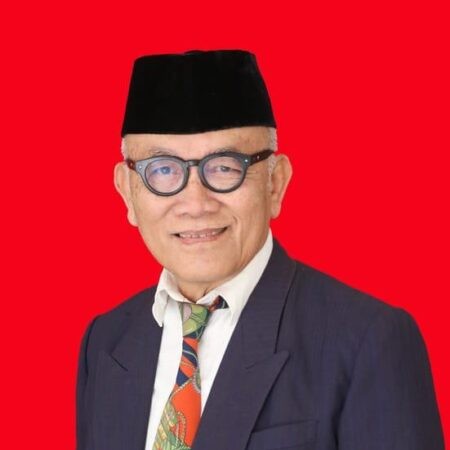
    Hendardi

    Chairperson of the SETARA Institute

    Ismail Hasani

    Chairperson of the Executive Boar

    Halili Hasan

    Executive Director

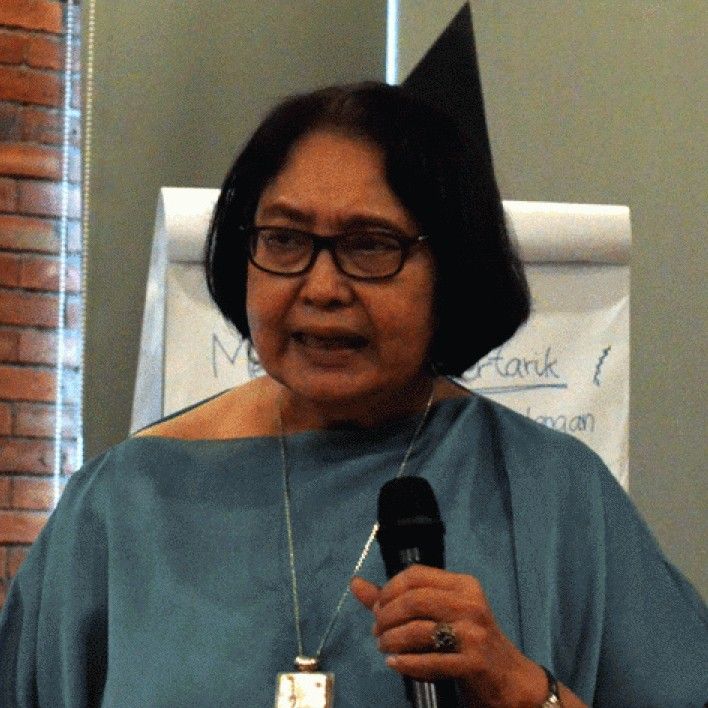
    Harkirtan Kaur Chahal

    Program Manager / Researcher on Freedom of Religion and Belief (KBB)

    Ikhsan Yosarie

    Human Rights and Security Sector Researcher

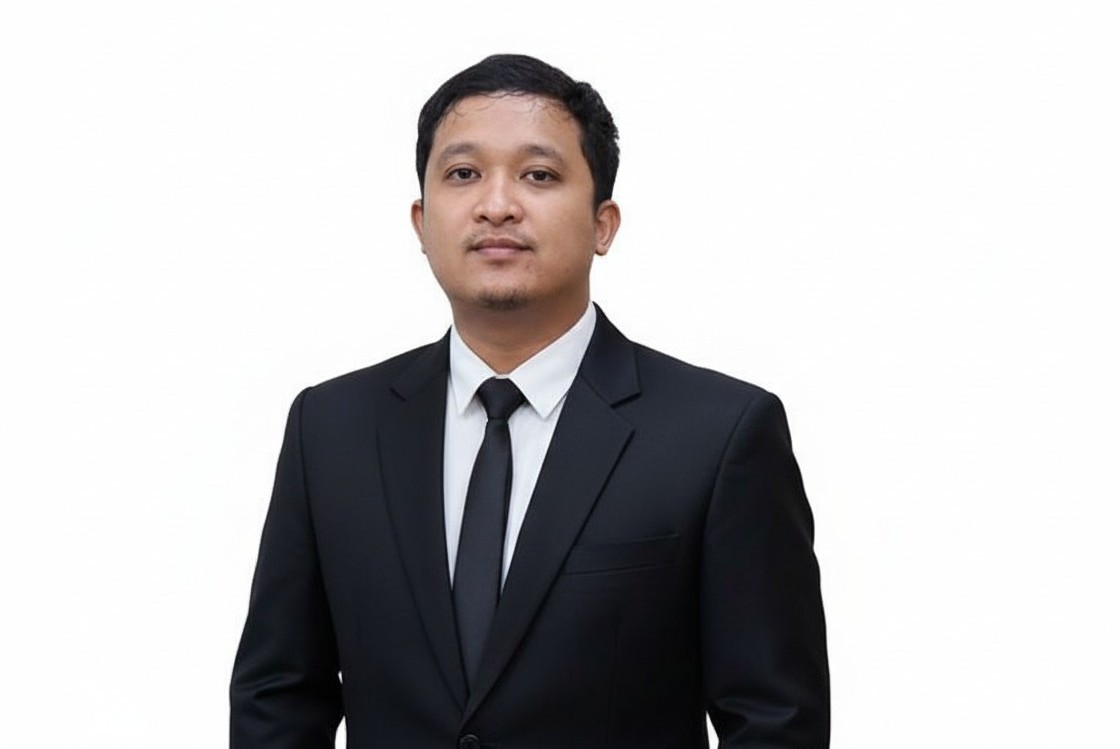
    Azeem Marhendra Amedi

    Legal and Constitutional Researcher

    Merisa Dwi Juanita

    Human Rights and Security Sector Researche

    Achmad Fanani Rosyidi

    Researcher on Freedom of Religion and Belief (KBB)
    Load More

    Let’s Work Together to Strengthen Inclusive Spaces

    SETARA is opening up opportunities for collaboration on capacity building, social dialogue and policy advocacy

    Contact Us

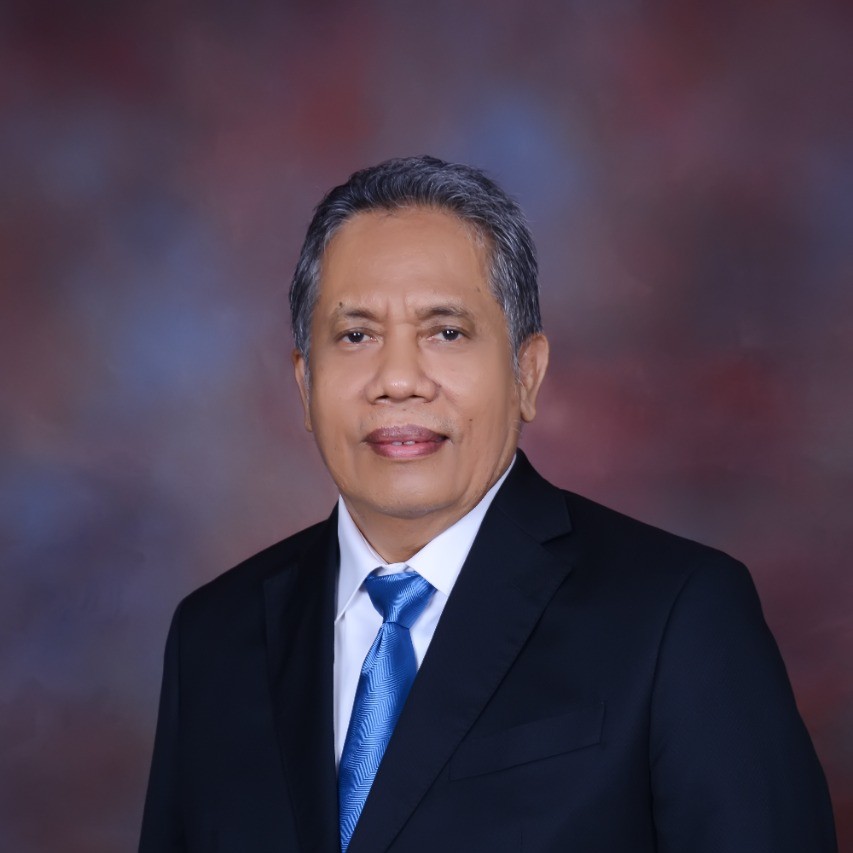
    Hendardi

    Chairperson of the SETARA Institute

    Hendardi is the Chair of the Board of Directors of the SETARA Institute, an organization he founded in 2005 in response to the rise of fundamentalism and discrimination in Indonesia. Known as one of the country’s most steadfast human rights activists, Hendardi has dedicated more than three decades of his life to advocating for equality, pluralism, and legal justice.

    Although he received his formal education at the Faculty of Civil and Environmental Engineering at the Bandung Institute of Technology (ITB), his journey as an activist began during the 1978 student movement against the New Order regime. His advocacy career continued to develop through various strategic institutions, ranging from the Bandung Legal Aid Institute (LBH), the Indonesian Legal Aid Foundation (YLBHI), to the establishment of the Indonesian Legal Aid and Human Rights Association (PBHI).

    Ismail Hasani

    Chairperson of the Executive Boar

    Ismail Hasani is a senior researcher at the SETARA Institute and has been a lecturer at the Faculty of Sharia and Law, Syarif Hidayatullah State Islamic University (UIN) Jakarta, since 2003. He completed his undergraduate studies at UIN Syarif Hidayatullah (2000) and Muhammadiyah University of Jakarta (2012), earned a Master of Laws from Muhammadiyah University of Jakarta (2003), and holds a Doctor of Laws from Gadjah Mada University in Yogyakarta (2019). His expertise spans constitutional law, human rights, and business and human rights (BHR). In addition to his academic role, Ismail is active as a legal and policy consultant, with extensive experience in drafting regulations, policy advocacy, and program management across various national and international projects. His involvement in field advocacy and public policy reflects his commitment to the protection and promotion of human rights, both through collaboration with government agencies and civil society organizations.

    Halili Hasan

    Executive Director

    Halili Hasan (Halili) is a permanent lecturer in the Department of Civic and Law Education at the Faculty of Social Sciences, Yogyakarta State University (UNY). He joined SETARA Institute as a researcher in 2011 and currently serves as its Executive Director. Prior to joining SETARA, Halili was actively involved in various human rights advocacy initiatives through the Indonesian Legal Aid and Human Rights Association (PBHI).

    His commitment to democracy and human rights issues is reflected in his academic and writing productivity. Hundreds of his articles have been published in national media outlets such as Kompas, Jawa Pos, Kedaulatan Rakyat, Radar Jogja, Harian Jogja, and Tribun Jogja, as well as in academic journals including Jurnal Civics, Jurnal Humaniora, Jurnal HAM, and Majalah RMOL.

    In addition to writing, Halili has frequently spoken at international conferences in countries including Australia (Sydney), Japan (Kitakyushu), Kyrgyzstan (Bishkek), Iran (Tehran), South Korea (Seoul), and Indonesia (Yogyakarta), sharing his perspectives on democracy, nationalism, and human rights. Dozens of books based on his work have been published by publishers such as Haka MJ Solo (2007), Putra Nugraha Solo (2008), Pustaka Masyarakat Setara (since 2011), and UNY Press (2017 & 2018).

    For his contributions to the fields of social humanities and civic education, Halili has received several prestigious awards, including:

    1. Grand Winner in the Social Humanities Category of the 2012 National Enrichment Book Competition organized by the Indonesian Ministry of Education and Culture for his book Ber-Pancasila Secara Sederhana;
    2. The Satyalancana Karya Satya 10-Year Service Medal from the President of the Republic of Indonesia (2017);
    3. The Best Presentation Award at The Asia Future Conference in Seoul, South Korea (2018).

    Harkirtan Kaur Chahal

    Program Manager / Researcher on Freedom of Religion and Belief (KBB)

    (Kirtan) is a Program Manager at the SETARA Institute responsible for managing a number of programs in the areas of freedom of religion or belief (FOB), human rights, and inclusive governance. In this role, Kirtan is involved in the planning, coordination, and implementation of various research and advocacy activities supported by national and international partners. Kirtan completed his Bachelor of Laws degree at Pelita Harapan University and has completed the Specialized Professional Training for Advocates (PKPA) and passed the Bar Exam (UPA). This legal background strengthens Kirtan’s contributions to policy work and monitoring the implementation of regulations, particularly regarding constitutional issues and the protection of vulnerable groups. Kirtan comes from the Sikh community, one of Indonesia’s religious minorities, and frequently represents this community in various interfaith forums at both the national and international levels. This experience has broadened Kirtan’s involvement in efforts to foster interfaith dialogue and advocate for equal rights for all citizens without discrimination. Kirtan also has experience collaborating with various state institutions and civil society organizations to promote the protection of minority groups and women from violence based on religion or belief. At the SETARA Institute, Kirtan has been involved in developing various research tools, such as the Tolerant Cities Index (IKT) and the Indonesian Social Inclusion Index (IISI), and has led digital campaigns aimed at engaging young people on issues of tolerance and human rights. Through his active involvement in KBB research, Kirtan focuses particularly on issues at the intersection of religious identity, gender, and civil liberties. Kirtan also frequently serves as a panelist in various public discussions to share perspectives grounded in his experiences and the empirical analysis he has developed throughout his work in this sector.

    IKHSAN YOSARIE

    Ikhsan Yosarie

    Human Rights and Security Sector Researcher

    Ikhsan Yosarie (Ikhsan) has been a full-time lecturer in Government Studies at Indo Global Mandiri University, Palembang, since September 2024. His educational background includes a Bachelor’s degree in Political Science from Andalas University (2013) and a Master’s degree in Political Science from the University of Indonesia (2020). Since March 2018, Ikhsan has been actively engaged as a researcher at the SETARA Institute, where he currently serves as a Senior Researcher. His research focuses on Human Rights, Security Sector Reform, Human Security, and Social Inclusion. As a lecturer, Ikhsan also teaches topics related to politics and democracy, human rights, and governance. To date, more than 200 of his articles on his research areas have been published in various national media outlets, including Kompas, Media Indonesia, Tempo, The Conversation, as well as various other national and local print and online media. Furthermore, Ikhsan is actively involved in numerous research projects, discussions, seminars, and focus group discussions centered around the issues of Security Sector Reform and Human Rights. He has published—whether as a sole author, lead author, or co-author—a number of research-based books related to human rights and the security sector, such as “Resistansi Militer: Evaluasi Dua Dekade Reformasi TNI” (Book Chapter, 2019), “Perihal Kekuatan Politik Militer” (2020), “QUO VADIS? Jalan Sunyi Agenda Reformasi TNI Pasca Orde Baru” (2021), “Kompleksitas Demokrasi dan HAM: Keamanan Manusia, Demokrasi Digital, Gender, dan Pemilihan Umum” (2021), “Survei Opini Ahli tentang Kualitas Kandidat Panglima TNI dan Roadmap Pasca Keterpilihan” (2021), “Analisis Penempatan Prajurit TNI di Jabatan Sipil pada Masa Orde Baru dan Pasca Reformasi” (2023), “Naskah Kebijakan: Mengawal Reformasi Tentara Nasional Indonesia Melalui Penolakan Usulan Perubahan dalam Revisi Undang-Undang Nomor 34 Tahun 2004 tentang Tentara Nasional Indonesia” (2023), “Desain Transformasi Polri Untuk Mendukung Visi Indonesia 2045” (2024), “Indeks Kota Toleran” (2021, 2022, 2023, and 2024), “Indeks Inklusi Sosial Indonesia 2024” (2025), as well as various other publications.

    AZEEM AMEDI

    Azeem Marhendra Amedi

    Legal and Constitutional Researcher

    Researcher in the fields of the rule of law and constitutional studies at the SETARA Institute. Azeem earned his Bachelor of Laws (S.H.) from the Faculty of Law at Padjadjaran University in Bandung and his Master of Laws (LL.M.) from York Law School at the University of York in the United Kingdom. His research focuses on, but are not limited to, constitutional law, comparative constitutional law, legal politics, law and human rights, legislative studies, constitutional court procedure, democracy studies, and inclusive governance. Azeem has been active in the research field since his university days, contributing to studies conducted at the Centre for Strategic and International Studies (CSIS) Indonesia, and to a research program on the protection of the fundamental rights of Rohingya refugees in Southeast Asia in collaboration with the Centre for Applied Human Rights at York Law School, University of York. Azeem has contributed to SETARA’s research, including the Design of Police Transformation (2024), the Impact and Indonesia’s Response to the Adoption of the EUCSDDD (2024), the Indonesian Social Inclusion Study (2025), the 2024 Tolerant Cities Index, and the Constitutional Decision Impact Assessment (CiDIA, 2025). Several of his articles have also been published in leading Indonesian media outlets, such as “Navigating the future of data privacy in Indonesia” (The Jakarta Post, 2024), “Predicting the Constitutional Court’s Position on the TNI Law Case” (Harian Kompas, 2025), and others.

    MERISA DWI JUANITA

    Merisa Dwi Juanita

    Human Rights and Security Sector Researche

    (Merisa) is a researcher in the field of Human Rights and Security Sector Reform at the SETARA Institute. Merisa holds a Bachelor’s degree in Political Science (with a focus on International Relations) from Muhammadiyah University of Yogyakarta, as well as a Master’s degree in Defense Studies with a specialization in Maritime Security from the Indonesian Defense University. Merisa has a particular interest and expertise in national and international security issues, especially those related to maritime security and security sector reform. In 2022, Merisa participated in the Yeosu Academy of the Law of the Sea program in South Korea. Merisa has authored various scholarly works published in journals and books, including her Master’s thesis titled The Role of Maritime Diplomacy in Managing the Crisis in the North Natuna Sea between Indonesia and China, published by the Indonesian Defense University (2021); Empowerment Strategies for Fishermen as a Solution to the Security Management Crisis in the North Natuna Sea (2022); “Gender Mainstreaming in Coastal Zoning and Its Impact on the Economic Resilience of Coastal Communities” (2023), “Designing the Transformation of the Indonesian National Police to Support the Indonesia 2045 Vision” (2024), and “The 2024 Indonesia Social Inclusion Index” (2025). Beyond her research activities, Merisa is also the founder of Bara Maritim, an independent platform focused on maritime security research, geospatial studies, and marine technology.

    Achmad Fanani Rosyidi

    Researcher on Freedom of Religion and Belief (KBB)

    (Awe) has been a researcher on Freedom of Religion and Belief (FoRB) at the SETARA Institute since 2014. In addition to FoRB, his academic and research focus includes Papuan studies, security, and human rights. Awe has also been involved as a researcher at the Lembaga Studi dan Advokasi Masyarakat (ELSAM) and the Lembaga Penelitian, Pendidikan, dan Penerangan Ekonomi dan Sosial (LP3ES). Throughout his career, Awe has engaged in various strategic research projects, such as the Annual Report on the Condition of Freedom of Religion and Belief in Indonesia (2015, 2016, 2017, & 2025), the Human Rights Index (2014–2016), the Study on Social Inclusion in Indonesia (2025), as well as research themed Youth Economy and Counterterrorism Policy (Pustaka Pelajar, 2018). He is also the lead author of several publications, including “Ambiguitas Politik HAM di Papua: Sebuah Laporan Kondisi HAM di Papua Tahun 2016” (SETARA Institute, 2017), “Rasisme di Papua: Tinjauan Pelanggaran HAM Pasca Kasus Rasisme Surabaya” (ELSAM, 2021), “Penguatan Konservatisme dalam Perubahan Sosial Politik” (SETARA Institute, 2019), and “KH Faqih Maskumambang dan Altar Kebangsaan” (LP3ES, 2025). In addition to being active as a writer and researcher, Awe serves as a facilitator and speaker in various human rights forums, mass media, as well as academic and public policy events. Outside of his research activities, Awe works as a development consultant for several ministries and state agencies, such as the Ministry of National Development Planning (BAPPENAS RI), the Ministry of Primary and Secondary Education (Kemendikdasmen), the Ministry of Home Affairs (Kemendagri), and the Ministry of Villages and Development of Disadvantaged Regions (Kemendes PDT). Awe holds a Bachelor’s degree in International Relations from UIN Syarif Hidayatullah Jakarta, and is currently pursuing a Master’s degree in Social Welfare at STISIP Widuri and a Master’s degree in Political Philosophy at STFI Sadra. Furthermore, he has participated in various non-formal education programs, such as SeHAMA KontraS, Security Sector Reform IDSPS, and Kalabahu LBH Jakarta, and has been active in organizational roles as the Deputy Secretary-General of PB HMI (2022), Coordinator of the Anti-Violence Student and Youth Committee / KOMPAK (2015), and National Coordinator of the People’s Student Federation / FMK (2018).