

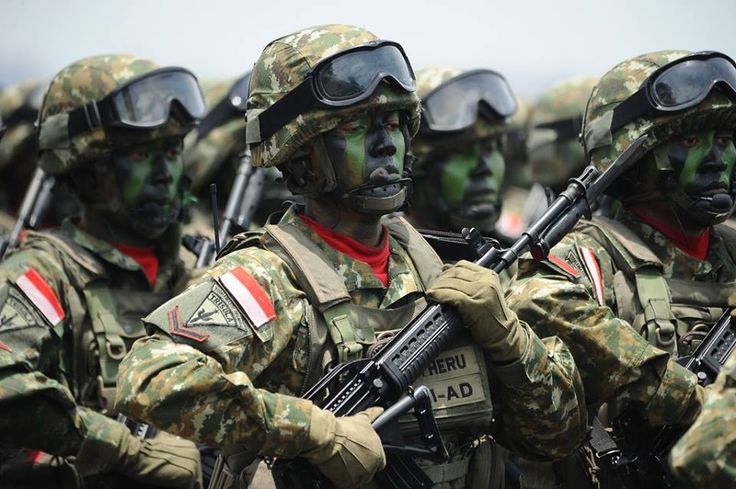
Since the 1998 Reformasi, one of the primary objectives of Indonesia’s security sector reform has been to limit the military’s role to national defense. Various legal and institutional instruments that enabled military involvement in civilian affairs were abolished, including the dwifungsi (dual function) doctrine and Law No. 2 of 1988 on the Armed Forces (ABRI), which had served as the legal foundation for its implementation. The ABRI faction in Parliament was also abolished to ensure the military’s withdrawal from formal politics.
These limitations were institutionalized through Law No. 34 of 2004 on the Indonesian National Armed Forces (TNI), later amended by Law No. 3 of 2025. Under this law, military involvement in civilian affairs is strictly limited, including the placement of active-duty military personnel in civilian positions, participation in Military Operations Other Than War (MOOTW), the affirmation of the military as the state instrument for national defense, and the regulation of the Territorial Command structure within the framework of TNI force development.
However, nearly one year into the Prabowo–Gibran administration, signs of regression in military reform have become increasingly evident. The placement of active-duty TNI personnel in civilian positions and military involvement in MOOTW have occurred beyond the limits prescribed by the TNI Law. Most recently, President Prabowo Subianto inaugurated 162 new military units within the TNI on Sunday (10 August 2025). These include six new Regional Military Commands (Kodam), 20 Territorial Development Brigades, and 100 Territorial Development Battalions.
The establishment of these new units not only contradicts the intended development of the TNI’s force posture but also accelerates military involvement in civilian affairs. As explained by the Head of Information Service of the Indonesian Army (Kadispenad), personnel assigned to these battalions are intended not for combat, but to address community needs ranging from food security to healthcare services. In addition, President Prabowo has reinstated the position of Deputy Commander of the TNI.
These developments can be understood as reinforcing militarism—namely, a political and social orientation that places the military as a dominant institution in state governance and democracy while normalizing military involvement beyond the defense sector. Meanwhile, the creation of such a large number of new units should be assessed against the principle of military professionalism, which emphasizes capability-based defense rather than manpower-based defense. Excessive emphasis on personnel expansion risks reverting the TNI to an outdated paradigm characterized by force expansion without corresponding transformation in doctrine, technology, or interoperability.
In light of these developments, SETARA Institute offers the following observations:
- The establishment of six new Regional Military Commands (Kodam) demonstrates policy-making that is inconsistent with the provisions of the TNI Law. Both the 2024 TNI Law and its revised version stipulate in Article 11 paragraph (2) that the TNI’s force posture must be developed and prepared in accordance with national defense policy. The explanatory section of this provision emphasizes that the deployment of TNI forces should avoid organizational structures that create opportunities for practical political interests and that military deployment should not simply mirror civilian administrative structures. However, the expansion of Kodam reflects the creation of military structures that closely follow regional administrative boundaries, bringing the military closer to civilian governance at the local level.
- In safeguarding national defense and sovereignty, as mandated by Article 11 paragraph (2) of the TNI Law, the development and deployment of TNI forces through the Territorial Command structure should prioritize vulnerable security areas, border regions, conflict-prone areas, and remote islands in accordance with Indonesia’s geographical conditions and defense strategy.
- The establishment of the Territorial Development Battalions represents an expansion of the military into civilian spaces under the banner of development and public welfare. Development rhetoric cannot conceal the reality that the military is expanding its influence into areas beyond its constitutional mandate. The existence of these non-combat battalions constitutes a deviation from the spirit of the 1998 Reformasi, which clearly separated military and civilian functions, and reflects a clear reversal of military reform through non-compliance with the limitations on MOOTW as stipulated in the 2025 TNI Law.
- The creation of these Development Battalions also distorts the military’s core defense function. While militaries around the world are strengthening their forces through technological advancement, enhanced capabilities, modern weapon systems, and improved troop welfare to respond to evolving threats, the TNI appears to be shifting its focus toward increasing personnel numbers to perform civilian functions that are already the responsibility of existing civilian institutions. The addition of 100 battalions will inevitably increase the state budget burden, particularly for salaries, infrastructure, and institutional maintenance. Considering the urgent need to strengthen military equipment and improve troop welfare, budgetary priorities should instead be directed toward these strategic needs.
- Following the removal of political decisions and state policy as the legal basis for implementing MOOTW through the revision of the 2004 TNI Law, the establishment of these Development Battalions further expands military involvement in civilian affairs without effective legislative oversight. This development recalls the legacy of ABRI’s dwifungsi, where a large military organizational structure facilitated military involvement in civilian administration and politics. It also risks undermining civilian institutions, as responsibilities traditionally carried out by civilian authorities—particularly at the regional level—are increasingly assumed by the Development Battalions.
- The President and the House of Representatives (DPR) should conduct a comprehensive evaluation of the establishment of the 162 new TNI units, particularly the six Regional Military Commands, 20 Territorial Development Brigades, and 100 Territorial Development Battalions. Such an evaluation should examine the strategic rationale and policy direction behind the expansion to ensure that it aligns with the objective of strengthening Indonesia’s defense posture, rather than merely enlarging the military structure without improving operational capabilities. The evaluation should also assess the implications for civil-military relations in order to prevent the further entrenchment of militarism that could erode civilian supremacy and democratic space, while reaffirming mechanisms for parliamentary and public oversight.
Contact Persons:
- Ikhsan Yosarie, Human Rights and Security Sector Researcher, SETARA Institute
- Merisa Dwi Juanita, Human Rights and Security Sector Researcher, SETARA Institute