

Jakarta —
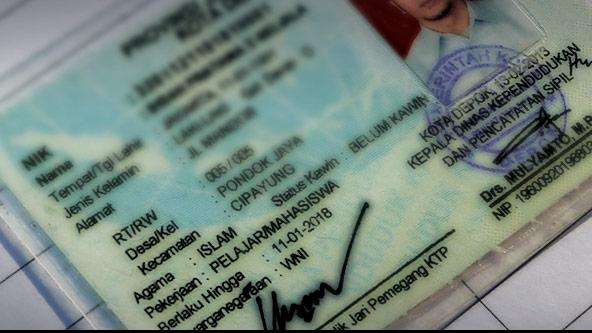
The Ministry of Religious Affairs has been advised to choose between allowing all religions practised in Indonesia to be listed on the Identity Card (KTP) or removing the religion field altogether. This is intended to prevent administrative discrimination against Indonesian citizens who practise religions not yet officially recognised in Indonesia.
“We must ensure that no religion is excluded, as this would hinder access to public services,” said Bonar Tigor Naikoskos, Deputy Chair of the Setara Institute, at a press conference at the Ministry of Religious Affairs in Jakarta on Monday (10 November).
Bonar acknowledged that including all religions practised in Indonesia on the list of recognised religions would be a difficult task. However, he is confident that it can still be achieved. “We are now using an electronic KTP system. I believe the data can be collected and stored in a database,” he said.
The Setara Institute held a dialogue with the Minister for Religious Affairs, Lukman Hakim Saifuddin. On that occasion, Setara also presented an academic paper that could be used as a reference.
According to Mubarok, Head of the Ministry of Religious Affairs’ Centre for Interfaith Harmony, the Minister for Religious Affairs welcomed the proposal and would give it careful consideration. Mubarok assured that the Minister would adhere to the constitution in implementing policy.
For the time being, the public is expected to comply with the existing regulations. “The ‘religion’ field on the ID card is governed by Law No. 23 of 2006. It states that only six religions are recognised, and if one adheres to a religion other than those recognised, that field on the ID card is left blank.”
Regarding the proposal from the Setara Institute, the Ministry of Religious Affairs stated that it is still examining the definition of religion in order to determine whether to recognise a particular faith. “If it is indeed a religion, hopefully it can be recognised as such. It depends on our assessment,” he said.
Bonar disagreed with this statement. “Under international human rights law, there is no rigid definition of religion. Religion is a broad concept; if defined so narrowly, it will lead to discrimination. As long as one believes in something transcendental, that is religion,” he said.
Minister Lukman had previously stated that the religion column must be retained because every country needs to know which religions its citizens practise. Furthermore, religious identity is important in the context of Indonesian national identity and occupies a strategic position in relation to the life of society and the state.
(rdk/rdk)
news source: http://www.cnnindonesia.com/nasional/20141110145036-20-10592/keputusan-soal-kolom-agama-tergantung-kemenag/