

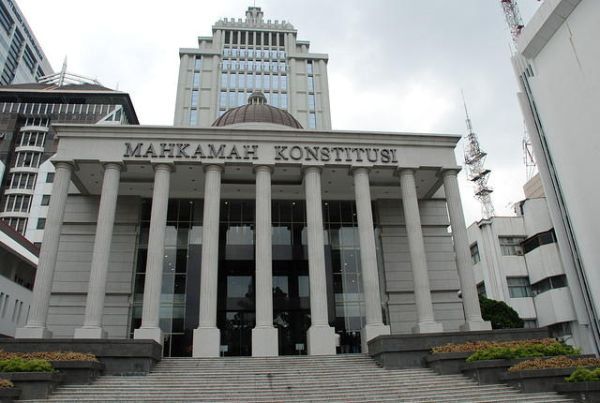
During this research period, although the number of Constitutional Court decisions increased quantitatively, there were not many substantive progressive breakthroughs in the Court’s rulings. Judicial activism , which characterized the decisions during the leadership of Jimly Asshiddiqie and Mahfud MD, has not yet been evident in the rulings of this period. One ruling that falls into the category of activism is the ruling on the constitutional review of the Water Resources Law, which struck down the entire law because its substance conflicted with Article 33 of the 1945 Constitution of the Republic of Indonesia.
Based on the 2013 study marking the 10th anniversary of the Constitutional Court, the SETARA Institute believes that the Constitutional Court has become an effective instrument and mechanism for advancing human rights and the constitutional rights of citizens. The Constitutional Court has also served as a guardian of constitutional democracy by reviewing and striking down all laws in the field of state administration that have the potential to undermine democratic practices. This report is dedicated to the celebration of Constitution Day on August 18, 2015, as declared by the People’s Consultative Assembly (MPR) of the Republic of Indonesia in 2008. As part of the Constitution Day celebrations, this research aims to identify progress in the fulfillment of citizens’ constitutional rights and the consolidation of constitutional law in particular, as well as other areas of law in general. This research is also useful for assessing the level of compliance by state officials with the Constitution of the Republic of Indonesia, particularly their responses in the form of enacting new laws or refraining from applying certain laws or articles when adjudicating cases because they have been struck down by the Constitutional Court.
The SETARA Institute analyzed 135 Constitutional Court rulings issued between August 19, 2014, and August 15, 2015. This time frame was chosen to cover the early period of the Constitutional Court’s operations and to coincide with Constitution Day on August 18, 2015. From these 135 decisions, the SETARA Institute organized them into a case matrix to identify various findings—both regarding case administration and (most importantly) the substance of the cases. The analysis examined whether these decisions made a strong contribution to the advancement of human rights and the strengthening of constitutional democracy, or whether, on the contrary, they undermined the constitutional rights of citizens and the foundations of Indonesia’s system of government.
During the period from August 2014 to August 2015, the Constitutional Court issued 135 rulings. Of these 135 rulings, the Constitutional Court granted only 21 cases, dismissed 43 cases, and declared 43 cases inadmissible. During this period, there were also rulings containing orders to withdraw (22 rulings) and orders of dismissal (6 rulings). Of the 135 rulings, the SETARA Institute noted that 25 had a positive tone, 3 had a negative tone, and the remaining 107 had a neutral or ordinary tone.
View Publication Constitutional Court Performance Report 2014–2015.pdf