

Jakarta-Papua Peace Dialogue
“Filep Karma has been in prison for 10 years. I believe his purpose is to serve as the conscience of the Papuan people. He has consistently fought for truth and peaceful means. He has no power, no organization, and no followers. He knows his people are vulnerable. He fights through his stance alone. President Joko Widodo (Jokowi) must put an end to all discrimination and racism in Papua—from the impunity enjoyed by human rights violators to the restrictions on independent journalists visiting Papua.”
This is the press statement released by the publisher, Deiyai, during the launch of a book by Papuan political prisoner Filep Karma, titled “Seakan Kitorang Setengah Binatang: Rasialisme Indonesia di tanah Papua” (“As If We Are Half-Animal: Indonesian Racism in the Land of Papua”), on Monday morning (01/12/2014) in Jayapura, Papua.
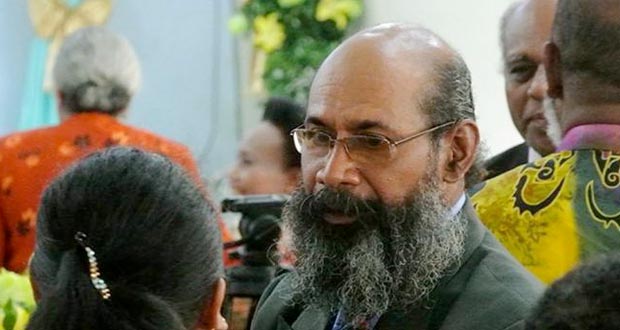
“Filep Karma cannot get out of prison. I represent and ask the Indonesian government to stop discrimination and racism against black people with curly hair, who are called Papuans,” said Benny Giay. “Karma has been imprisoned for 10 years for speaking about the aspirations of Papuan independence peacefully, without violence. What is the difference between this and someone in Java speaking about the Islamic Caliphate? I hope President Jokowi realizes that Filep Karma should be released.”
The book is the result of interviews with Filep Karma over two years. The interviews were conducted in prison and in the hospital while he was seeking treatment. Karma reviewed all transcripts, helped with data research, went back and forth with the Deiyai editorial team, and agreed with the final result. It consists of five sections, starting with stories of his childhood in Wamena and Jayapura, the “Bloody Biak” incident, to criticisms of the perpetrators of the Papuan independence struggle.
Karma tells how the Indonesian military and police violated human rights through various operations. The perpetrators are immune to the law, including in the Biak massacre on July 6, 1998, when hundreds of Papuans were arrested, beaten, and their bodies dumped into the sea. Karma also tells stories of children born from rape by Indonesian soldiers. He also recounts how the people of Papua, from the 1969 Act of Free Choice until today with the “noken system”—justified by the Constitutional Court—are still not given the right to one man one vote.
Independent journalists and human rights organizations have also been restricted from entering Papua since 1963. This is different from journalists wanting to visit other cities in Indonesia. There is no special permit needed if a foreign journalist wants to go to Pekanbaru or Makassar. Personally, Karma also tells of how when he was a student in Solo in the 1990s, he was often called a “monkey” or “koyo ketek” (like an ape). People would also often cover their noses when near Papuans. This was not only in Java but also in Papua, by migrants living from Sorong to Merauke, from Wamena to Paniai. Karma is of the opinion that Papuans, with their black skin and curly hair, are considered “half-animal.” Karma experienced an awakening when he was studying in Manila, Philippines, and returned to Papua in May 1998.
Karma was imprisoned after a speech regarding the marginalization of the Papuan ethnic group and raising the Morning Star flag in the Abepura field on December 1, 2004. He was arrested, tried, convicted of treason (makar), and sentenced to 15 years in prison by the Abepura court. He appealed but lost in the Papua high court and later the Supreme Court in Jakarta. He then appealed to the United Nations in New York with pro-bono legal assistance from Freedom Now in Washington D.C. In November 2011, the UN Working Group on Arbitrary Detention in New York ruled that the Indonesian court did not provide a “fair trial” to Karma. The treason articles in the Criminal Code were interpreted disproportionately. They asked the Indonesian government to release Karma “as soon as possible and unconditionally.”
The administration of President Susilo Bambang Yudhoyono never responded to the UN ruling. “Filep Karma has been in prison for 10 years. I think his purpose is to serve as the conscience of the Papuan people. He has consistently fought for truth and peaceful means. He has no power, no organization, and no followers. He knows his people are vulnerable. He fights through his stance alone,” said Giay. “In Papua, many people can be bought… with money, positions, titles, and promises. But Filep Karma refused to be bought. He showed that Papuans have self-respect. He is the conscience of the Papuan people,” said Giay.
James Elmslie, a professor from the University of Sydney who wrote the book Irian Jaya Under the Gun: Indonesian Economic Development versus West Papuan Nationalism, wrote the foreword for Karma’s book. According to Elmslie, “The title of the book is a powerful expression that explains the 52 years of mishandling of West Papua by the Indonesian government. To this day, West Papuans are treated as ‘half-animal’ throughout the country, from Jayapura to Wamena in the Central Highlands.” Elmslie lived for several years in Papua. He stated that Karma’s book provides a new perspective, allowing readers to truly understand Indonesia’s treatment of West Papua. “Filep Karma explains this cruel treatment of Papuans by Indonesia as being based on deep-seated racism.”
Support for this book was written by seven people, including Carmel Budiardjo, the founder of the organization Tapol in London, and Imam Shofwan from the Pantau Foundation in Jakarta. Eben Kirksey, an anthropologist who wrote the book Freedom in Entangled Worlds: West Papua and the Architecture of Global Power, praised Filep Karma as “… the bravest leader in West Papua. He fights violence with non-violent tactics like Mahatma Gandhi, Martin Luther King, and Nelson Mandela.”
Benny Giay also reminded everyone that Filep Karma as well as more than 60 other political prisoners in Papua should be released. “Presidents B.J. Habibie and Abdurrahman Wahid had done so. They are remembered as good people by the Papuan people,” said Giay. He believes that President Jokowi is also a noble-hearted person. He asked Jokowi, who plans to celebrate Christmas in Papua, to also release the Papuan political prisoners.
OKTOVIANUS POGAU