

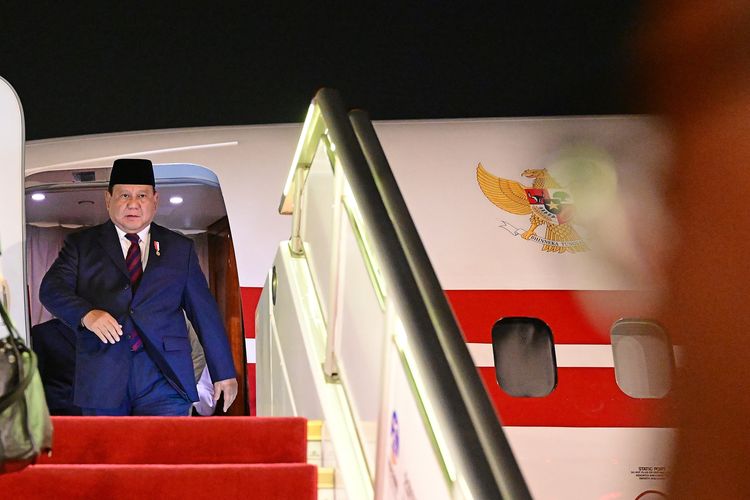
President Prabowo Subianto’s first official visit to China to meet with President Xi Jinping, following his inauguration on 20 October 2024 as President of Indonesia for the 2024–2029 term, marked the beginning of a more explicit and clearly defined strategic partnership between Indonesia and China.
During the visit, the two countries signed a memorandum of understanding (MoU) covering joint development in the fisheries, oil, and gas sectors within maritime areas claimed by both countries. The agreements also included cooperation on maritime safety, as well as enhanced collaboration in the fields of the blue economy, water and mineral resources, and green minerals.
Bara Maritim and SETARA Institute consider this policy to be misguided and to pose serious risks to Indonesia. The reasons for this assessment are as follows:
1. Rejection of China’s Unilateral Claim
Indonesia has never recognized China’s unilateral claim based on the Ten-Dash Line map in the South China Sea, published on 28 August 2023 by China’s Ministry of Natural Resources. This claim encompasses vast areas of the South China Sea, including islands, reefs, and the maritime zones of other countries, while also encroaching upon Indonesia’s lawful maritime waters surrounding the Natuna Islands.
2. Compliance with UNCLOS 1982
Both Indonesia and China are parties to the 1982 United Nations Convention on the Law of the Sea (UNCLOS 1982). Indonesia’s maritime claims are fully grounded in the provisions of UNCLOS 1982. China’s claimed maritime area extends far beyond the limits of the 200-nautical-mile Exclusive Economic Zone (EEZ) and the 350-nautical-mile continental shelf, making it evident that there is no legitimate overlapping maritime claim between the two countries.
Consequently, initiating joint cooperation in areas described as “overlapping claims” lacks a sound legal basis, particularly given Indonesia’s consistent diplomatic protests against China’s claims since 1995, beginning under Foreign Minister Ali Alatas and continuing through Foreign Minister Retno Marsudi during the 2019–2024 period. Therefore, the joint statement referring to overlapping maritime claims between the two countries represents a serious inconsistency with Indonesia’s long-standing legal and diplomatic position.
3. The 2016 International Arbitral Tribunal Award
China’s claim based on the Ten-Dash Line (previously the Nine-Dash Line) was rejected by the 2016 South China Sea Arbitration Award, which found that the claim has no legal basis under international law. Accordingly, the signing of the memorandum of understanding by President Prabowo may be interpreted as an acknowledgment of China’s maritime claim, despite the fact that the claim is not legally valid under international law.
4. Violations by Chinese Fishermen and the China Coast Guard
Chinese fishing vessels, accompanied by the China Coast Guard, have repeatedly engaged in illegal, unreported, and unregulated (IUU) fishing while intruding into Indonesia’s Exclusive Economic Zone (EEZ) in the North Natuna Sea. These actions have created a prolonged crisis that has harmed Indonesia economically while also threatening the safety and security of Indonesian fishermen operating in the affected waters.
Recommendations from Bara Maritim and SETARA Institute
Bara Maritim and SETARA Institute urge the Government of Indonesia, through the Ministry of Foreign Affairs or President Prabowo himself, to immediately issue an official statement reaffirming Indonesia’s legal position in accordance with UNCLOS 1982 and the 2016 International Arbitral Tribunal Award.
Furthermore, Indonesia should strengthen the development of its maritime potential within areas under its jurisdiction while enhancing human security for Indonesian fishermen through more effective law enforcement in maritime crisis zones. This should include upgrading the capabilities and advanced equipment of Bakamla (Indonesia’s Maritime Security Agency) patrol vessels to improve maritime security and safeguard Indonesia’s territorial waters.
Media Contact:
Merisa Dwi Juanita, Founder, Bara Maritim Researcher on Human Rights and the Security Sector SETARA Institute