

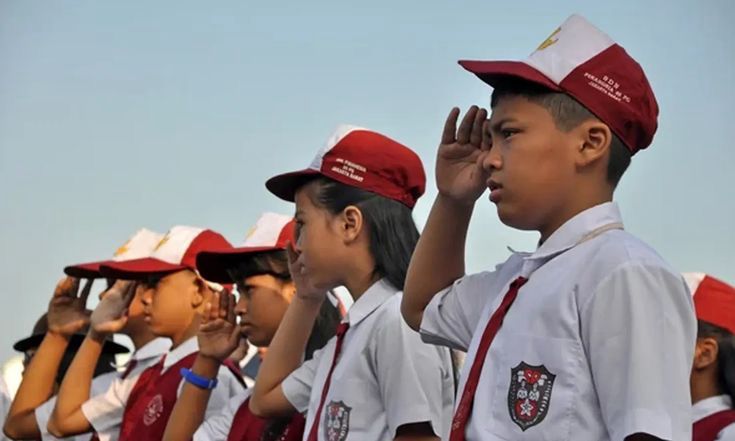
As Indonesia approaches the middle of 2025, another deeply concerning incident of intolerance has occurred. The tragic event claimed the life of an eight-year-old elementary school student, identified by the initials KB, in Pangkalan Kasai Village, Seberida District, Indragiri Hulu Regency, Riau. The victim died after being bullied and physically assaulted by several older students at school. The violence is alleged to have been motivated by the fact that the victim practiced a different religion from the perpetrators.
In response to this case, SETARA Institute issues the following statement.
First, SETARA Institute strongly condemns this tragic incident. The violence that resulted in the child’s death constitutes a grave violation of children’s rights as guaranteed under Article 28B paragraph (2) of the 1945 Constitution, which states that “Every child has the right to live, grow, and develop, and has the right to protection from violence and discrimination,” as well as the right to freedom of religion or belief as guaranteed under Article 29 paragraph (2) of the 1945 Constitution.
Second, this case demonstrates that intolerance has clearly permeated the lives of Indonesia’s youngest generation. Symptoms of intolerance are no longer confined to high school students but have reached children of much younger ages. A survey conducted by SETARA Institute in February 2023 found that far greater efforts are needed to prevent the spread of intolerance and violent extremist ideologies within Indonesia’s education system. Although 70.2% of respondents were categorized as tolerant, 24.2% of senior high school students were classified as passively intolerant, 5% as actively intolerant, and 0.6% had been exposed to violent extremist ideology.
Third, in the context of this tragedy in Riau, the state must not remain passive. The government must be present and take adequate measures to ensure protection for children and religious or belief minorities, while guaranteeing that the perpetrators and all parties responsible are brought to justice in accordance with the law.
Fourth, SETARA Institute specifically urges several institutions to take immediate action. The Indonesian National Police (Polri) should conduct a thorough investigation into this case and ensure that all perpetrators, including any other parties who may have been involved—such as adults whose negligence or failure to intervene may have contributed to the incident—are processed professionally through the legal system in order to deliver justice for the victim and the victim’s family. The Police, together with the Witness and Victim Protection Agency (LPSK), should also provide protection to the victim’s family, particularly the parents, to prevent further intimidation.
The local government should evaluate the school environment that has become vulnerable to discrimination, intolerance, and violence, while mobilizing the necessary resources and relevant programs to ensure that educational institutions provide peaceful, non-discriminatory, inclusive, and safe learning environments for all students.
The Ministry of Primary and Secondary Education should evaluate and monitor the existence and performance of the Violence Prevention and Response Teams (TPPK) established in educational institutions pursuant to Minister of Education, Culture, Research, and Technology Regulation No. 46 of 2023 on the Prevention and Handling of Violence in Educational Environments. The existence and effective functioning of these teams should have prevented the violence experienced by KB, as well as other forms of violence occurring within educational institutions.
The Ministry of Women’s Empowerment and Child Protection (KPPPA) should provide rehabilitation services and psychological assistance to the victim’s family. The Ministry must also ensure that the rights of both the victim’s family and the child perpetrators are protected throughout the legal process.
The Ministry of Religious Affairs and the Ministry of Home Affairs should also carry out their respective responsibilities by immediately developing preventive and responsive measures to address religion-based discrimination at the regional level. They should further encourage the active involvement of local government institutions in promoting tolerance, fostering encounters across different identities, and strengthening social inclusion from an early age within Indonesia’s diverse society.
Contact Persons:
Harkirtan Kaur, Researcher on Freedom of Religion or Belief, SETARA Institute, +62 878-7596-7785
Halili Hasan, Executive Director, SETARA Institute, +62 852-3000-8880