

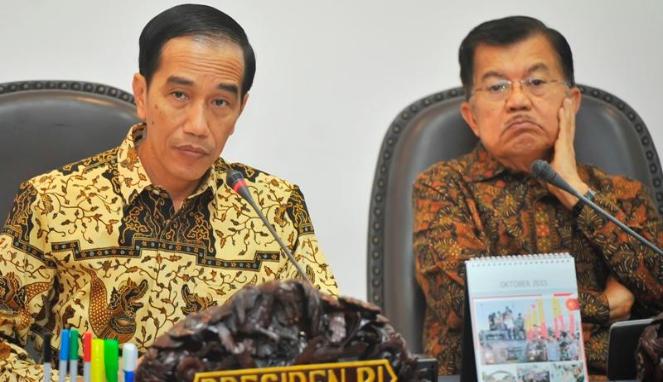
VIVA.co.id – The administration of President Joko Widodo and Vice President Jusuf Kalla was assessed as not prioritizing human rights (HR) issues in its government agenda. Instead, President Jokowi was considered to place greater emphasis on economic development and infrastructure than on the promotion and protection of human rights.
This assessment was reflected in the findings of a survey conducted by SETARA Institute to mark International Human Rights Day, observed annually on 10 December.
“Human rights are not a priority for the Jokowi–JK administration. If we look at the three key policy documents—the 2015–2019 National Medium-Term Development Plan (RPJMN), the National Human Rights Action Plan (RANHAM), and the Government Work Plan—it is clear that human rights are not treated as a priority,” said Bonar Tigor Naipospos, Deputy Executive Director of SETARA Institute, during a press conference in Cikini, Jakarta, on Wednesday, 9 December 2015.
SETARA Institute’s Director of Research, Ismail Hasani, explained that the survey was conducted to evaluate the annual state of human rights in Indonesia.
The survey was intended to provide an overview of the country’s human rights situation while also serving as a reference for improving the government’s performance in the future.
According to Ismail, the survey involved 215 respondents from diverse backgrounds, including academics, researchers, activists, community leaders, and lawyers. Data were collected through questionnaires using a perception index scale ranging from 0 as the lowest score to 7 as the highest.
Ismail noted that the survey measured eight key variables: the resolution of past human rights violations; freedom of expression; freedom of religion or belief; citizens’ sense of security and state protection; the abolition of the death penalty; the elimination of discrimination; economic, social, and cultural rights; as well as the National Human Rights Action Plan (RANHAM) and the performance of human rights institutions.
The survey results indicated that while several variables showed improvement, others experienced decline. One of the most significant decreases was in the variable concerning the abolition of the death penalty. In 2014, the survey recorded a score of 2.18, but one year later it had fallen to 1.99.
“The government received a poor score because it carried out executions of death row inmates,” said Ismail.
Overall, Indonesia’s Human Rights Index declined slightly from 2.49 to 2.45 during the year. By comparison, the index had increased, albeit modestly, between 2013 and 2014.
Ismail stated that the earlier increase reflected respondents’ optimism that President Jokowi’s development agenda would bring meaningful improvements. However, after one year in office, the government’s implementation did not match its commitments.
“For example, the promise to resolve past human rights violations was clearly stated in the Nawacita agenda, but its quality was significantly diluted in the National Medium-Term Development Plan (RPJMN),” Ismail said. (ase)
Source: nasional.news.viva.co.id